- Born: 16 June 1971
- Officially died: 13 September 1996
- Age: 25
- Location: Las Vegas, Nevada
- Official cause: Respiratory failure and cardiopulmonary arrest associated with multiple gunshot wounds
- Autopsy: Yes
- Status: Officially deceased
Did Tupac really die in Las Vegas?
Tupac
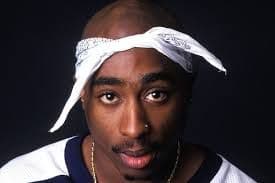
By 1996, Tupac Shakur had become far more than a successful rapper.
He was one of the biggest and most controversial figures in hip-hop, an actor, poet and outspoken public figure whose life seemed to move at extraordinary speed.
He had already survived being shot before.
In November 1994, Tupac was shot several times during a robbery at Quad Recording Studios in New York. He survived and became convinced that people within the East Coast music world knew more about the attack than they admitted.
By the time he signed with Death Row Records the following year, the rivalry surrounding Tupac had become part of something much bigger.
East Coast against West Coast.
Death Row against Bad Boy.
Tupac against The Notorious B.I.G.
The lines between music, personal rivalry and street violence had become increasingly difficult to separate.
Then came Las Vegas.
On 7 September 1996, Tupac attended the Mike Tyson versus Bruce Seldon heavyweight fight at the MGM Grand.
Hours later, he was fighting for his life.
Six days after that, Tupac Shakur was dead.
At least, according to the official record.
The Night of the Shooting
The events immediately before Tupac was shot are now well documented.
Tupac attended the Tyson fight with Death Row Records founder Marion 'Suge' Knight and members of their entourage.
After the fight, surveillance footage captured Tupac and others attacking Orlando Anderson inside the MGM Grand.
Anderson was associated with the South Side Compton Crips and had become involved in an earlier dispute with people connected to Death Row Records.
Prosecutors would eventually argue that the beating became the motive for what happened later that night.
Tupac then left the MGM Grand with Knight.
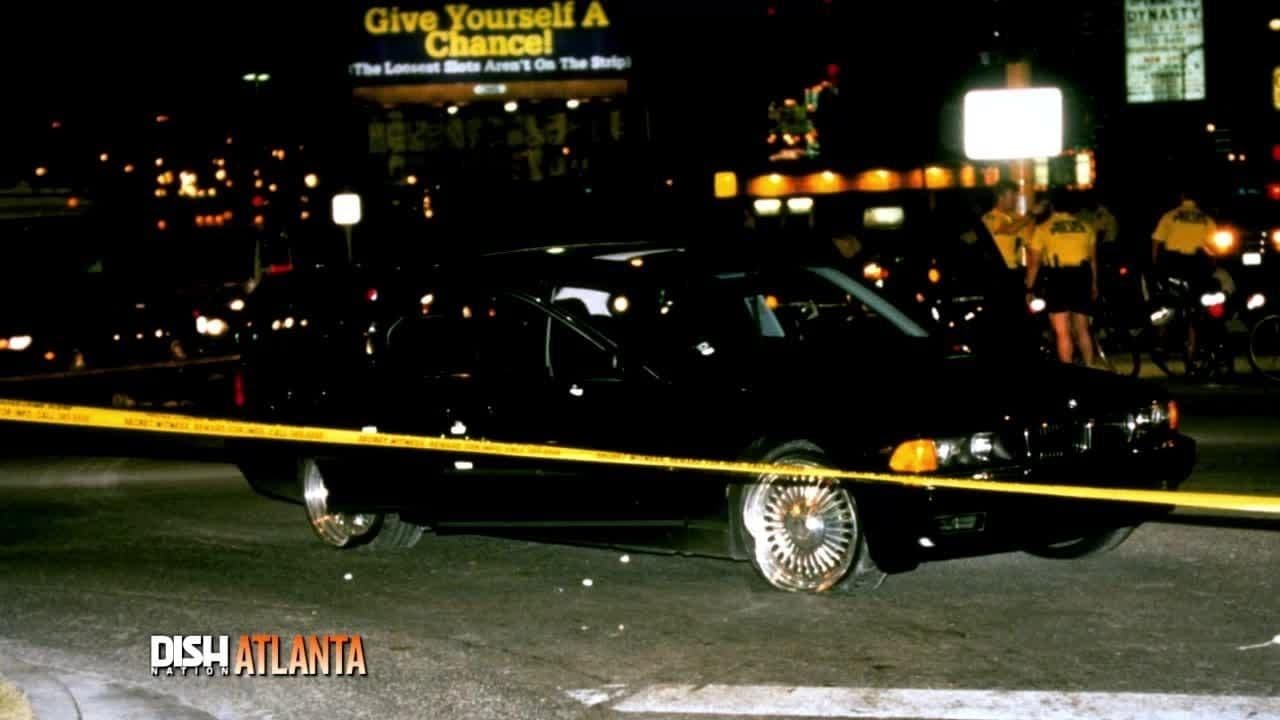
At approximately 11.15 pm, they were travelling towards Club 662 in Knight's black BMW when they stopped at a red light near the Las Vegas Strip.
A white Cadillac pulled alongside them.
Someone inside opened fire.
Tupac was struck multiple times.
Knight was injured but survived.
Contemporary FBI records describe Tupac being hit at least four times, including two wounds to the chest.
Tupac was taken to University Medical Center in Las Vegas.
He was critically injured.
But he was alive.
Six Days
This is where much of the later mythology begins.
Tupac did not die at the scene.
He survived for six days.
Doctors carried out major surgery and attempted to save him. One of his lungs was ultimately removed after a bullet caused severe damage and internal bleeding. Recent forensic testimony given during the 2026 murder trial confirmed the extent of the injuries and the medical attempts to keep him alive.
On 13 September 1996, Tupac's condition deteriorated.
He was pronounced dead at 4.03 pm.
Contemporary reporting recorded the immediate cause as respiratory failure and cardiopulmonary arrest resulting from his gunshot injuries.
He was twenty-five years old.
There Was an Autopsy
This is important when examining claims that Tupac survived.
An autopsy was performed.
The official cause of death was connected directly to the gunshot wounds he had sustained in Las Vegas.
His body was also positively identified by his mother, Afeni Shakur, according to reporting based upon Clark County records.
And there is something else.
Autopsy photographs exist.
They were not simply rumours on the internet.
In August 2026, nearly thirty years after Tupac's death, some of those photographs were shown to a Las Vegas jury during the murder trial of Duane 'Keffe D' Davis.
A Clark County forensic pathologist testified about the injuries visible on Tupac's body, including his wounds, medical treatment and distinctive tattoos.
That is extremely strong evidence that a body identified as Tupac Shakur was examined after his death.
Any serious survival theory has to confront it.
Then Why Did People Begin Believing He Was Still Alive?
Because almost everything that happened afterwards seemed to feed the theory.
There was no large public funeral where thousands of fans viewed Tupac's body.
He was cremated.
Then new music began appearing.
A lot of it.
Within two months, an album was released under a different name.
Makaveli.
The album was called:
The Don Killuminati: The 7 Day Theory.
Its artwork showed Tupac crucified.
And the liner notes included the phrase:
'Exit 2Pac, Enter Makaveli.'
The album had been recorded before Tupac was shot, but to fans looking for clues after his death, it appeared almost designed to create suspicion.
Contemporary coverage of the album noted Tupac's fascination with Niccolò Machiavelli and the new Makaveli identity.
Then came the number seven.
Seven became central to the conspiracy.
Tupac was shot on 7 September.
He survived for six days and died on the 13th.
The album was called The 7 Day Theory.
Fans began finding supposed references to seven throughout Tupac's work.
Some claimed that after seven days, or seven years, Tupac would return.
The problem is that much of this was numerology created after the event.
There is no reliable evidence that Tupac deliberately constructed a seven-day code predicting a fake death.
But it became one of the foundations of the theory.
Makaveli
The name itself became even more important.
Tupac had been reading about the Renaissance political thinker Niccolò Machiavelli while imprisoned.
After his release, he adopted Makaveli as an alter ego.
A widely repeated internet claim says Machiavelli taught that people should fake their own deaths in order to deceive their enemies.
That claim is often used as supposed evidence that Tupac was planning the same thing.
But the historical Machiavelli did not leave behind a straightforward instruction telling people to fake their death and return later.
The connection is largely a conspiracy interpretation built around Tupac's choice of name.
Yet the timing couldn't have been more effective.
Tupac dies.
Then an album appears under a new identity.
The artwork depicts resurrection imagery.
The notes announce the end of 2Pac and the arrival of Makaveli.
For fans already unwilling to believe he was gone, it was irresistible.
The Cremation
Then there was another detail.
Tupac's body was cremated.
There was no permanent grave where fans could visit him.
No coffin remained underground.
No body was available for future examination.
By 1998, The Washington Post was already discussing the growing survival theory and specifically noted that there had been no public funeral and that Tupac had been cremated.
That inevitably created suspicion.
But cremation itself is not evidence of a staged death.
Nor does it erase the medical evidence that came before it.
Tupac spent six days in hospital.
Doctors treated him.
An autopsy was subsequently performed.
His mother identified his body.
The fact that he was later cremated does not undo those events.
No Public Funeral
This became another central part of the legend.
Fans were never given a conventional public farewell.
There was no enormous open-casket memorial where the public could see Tupac for themselves.
Plans for memorial events changed or were cancelled, while his body was cremated soon after his death.
For conspiracy believers, that created a simple question:
If Tupac was really dead, why didn't the world see the body?
There is an equally simple answer.
Families do not have to provide public access to the bodies of their relatives.
The absence of a public viewing isn't evidence that somebody survived.
But psychologically, it mattered.
Millions of fans heard Tupac was dead.
Very few actually saw evidence of it themselves.
Then the Sightings Began
Over the following years, supposed photographs and sightings appeared from around the world.
Some claimed Tupac had been seen in Los Angeles.
Others placed him in Africa.
One of the most persistent theories claimed he had escaped to Cuba.
The idea fitted the story because Tupac's family had connections with the Black liberation movement, and his aunt Assata Shakur had lived in Cuba after escaping from prison in the United States.
But no authenticated photograph, document or independently verified sighting has established that Tupac was living there.
The Cuba story remains exactly that.
A theory.
Then Suge Knight Said Something Very Strange
If there was one man whose comments were guaranteed to reignite the conspiracy, it was Suge Knight.
Knight had been driving the BMW when Tupac was shot.
He had been sitting beside him.
He visited Tupac during his hospitalisation.
And more than twenty years later, Knight suggested Tupac might still be alive.
In a 2017 television interview, Knight recalled visiting Tupac in hospital and said:
'When I left that hospital, me and Pac was laughing and joking.'
Asked directly whether Tupac might still be alive, Knight replied:
'With Pac, you never know.'
Those comments attracted enormous attention because they came from someone who had been sitting beside Tupac during the shooting.
But Knight did not provide evidence that Tupac had survived.
He did not produce a document.
He did not reveal a location.
He did not identify a fake body.
The comments were provocative.
They were not proof.
Could Tupac Have Wanted to Disappear?
This is where the theory becomes more interesting.
Tupac's life in 1996 was chaotic.
He had already survived a shooting.
He had served time in prison.
He was involved in a bitter public feud.
He was surrounded by people associated with violent street organisations.
His behaviour was increasingly confrontational.
He was extraordinarily famous.
And he knew people wanted him dead.
If anyone had a reason to imagine starting again somewhere else, Tupac arguably did.
He was only twenty-five.
He had money.
He had international connections.
He was an actor as well as a musician, someone comfortable changing his appearance and playing characters.
And perhaps most importantly, he had already become fascinated by the idea of reinvention.
2Pac was becoming Makaveli.
So the conspiracy asks an obvious question.
What if Makaveli wasn't simply another stage name?
What if it represented the death of one identity and the beginning of another?
It's a compelling idea.
But once again, motive is not evidence.
The Biggest Problem With the Theory
Tupac did not simply vanish after the shooting.
He was taken to a major hospital.
He remained there for six days.
Doctors operated on him.
Medical staff cared for him.
Family and friends visited him.
His condition was documented.
His mother was present.
He was declared dead.
His body underwent an autopsy.
Those facts create an enormous problem for any fake-death theory.
If Tupac escaped alive, when did the substitution happen?
Was it before the hospital?
During the six days he was there?
After he was pronounced dead?
Before the autopsy?
And if another person replaced him, where did that body come from?
How did doctors who had spent days treating Tupac fail to notice?
How did his mother fail to recognise that the body wasn't her son?
There is no credible evidence answering any of those questions.
And Then the Murder Case Changed Everything
For decades, one of the reasons conspiracy theories thrived was that nobody had been convicted of Tupac's murder.
That is no longer true.
In September 2026, a Las Vegas jury convicted Duane 'Keffe D' Davis of first-degree murder for orchestrating the attack that killed Tupac.
Prosecutors argued that the shooting was revenge for the attack on Davis's nephew, Orlando Anderson, earlier that evening.
Davis was not accused of firing the weapon himself. The case was built around his role in organising the retaliation and statements he had made over the years about being inside the Cadillac from which the shots were fired.
During the trial, jurors heard a recording in which Davis identified Anderson as the gunman and described passing a weapon towards the back seat of the Cadillac. Davis's defence argued that his previous accounts were unreliable and exaggerated.
The jury nevertheless found Davis guilty.
That is now a major part of the historical record.
And it significantly weakens the idea that Tupac's shooting was simply staged as part of a disappearance plan.
A court has now concluded that a real murder conspiracy existed.
The Autopsy Photographs Matter Too
The 2026 trial produced another problem for the survival theory.
Jurors were shown photographs from Tupac's autopsy.
A forensic pathologist explained his wounds, including the damage to his chest, lung and other organs.
Some members of Tupac's family chose to leave the courtroom before the images were displayed.
That doesn't make every question surrounding Tupac disappear.
But it makes one particular question considerably harder to avoid.
If Tupac survived, whose body is shown in those photographs?
The Strongest Evidence Against the Conspiracy
There is substantial evidence that Tupac Shakur died on 13 September 1996.
He was shot in front of witnesses.
Police attended the scene.
He was transported to University Medical Center.
Doctors carried out major surgery.
He remained hospitalised for six days.
One lung was removed.
His condition deteriorated.
He was pronounced dead.
His mother identified his body.
An autopsy was conducted.
Autopsy photographs exist.
Those photographs have now been examined publicly during a murder trial.
And in 2026, a jury convicted Duane Davis of orchestrating the shooting that killed him.
There is currently no credible evidence demonstrating that Tupac Shakur faked his death.
The evidence for his death is considerably stronger than the survival mythology suggests.
So Why Won't the Theory Die?
Because Tupac almost seemed to write the conspiracy himself.
He survived one shooting before dying after another.
He adopted the name Makaveli.
He recorded an album called The 7 Day Theory.
The artwork depicted his crucifixion.
The notes announced:
'Exit 2Pac, Enter Makaveli.'
His body was cremated.
There was no public viewing.
Huge quantities of unreleased music continued appearing after his death.
Supposed sightings followed.
Stories placed him in Cuba.
And the man sitting beside him when he was shot later publicly suggested:
'With Pac, you never know.'
None of those things proves Tupac survived.
Together, however, they created almost the perfect environment for a conspiracy theory.
The Questions That Remain
Why did Tupac choose the name Makaveli shortly before his death?
Was The 7 Day Theory simply an artistic concept, or was Tupac deliberately experimenting with ideas of death and rebirth?
Why did the phrase 'Exit 2Pac, Enter Makaveli' appear on an album released weeks after his death?
Why was there no public funeral or viewing?
Why was Tupac cremated so quickly?
Why did so much unreleased music appear after he died?
Were the supposed sightings simply grief, mistaken identity and hoaxes?
Why did Suge Knight, the man sitting beside Tupac when he was shot, later suggest that he might somehow still be alive?
Was Knight simply fuelling a famous conspiracy?
Or was there something about those six days in hospital that still troubled him?
Could a twenty-five-year-old man who already believed his enemies wanted him dead have wanted to abandon his old identity?
If he did, could he possibly have escaped a hospital filled with doctors, nurses, family and security without somebody eventually revealing what happened?
And after the 2026 murder conviction and the public presentation of Tupac's autopsy evidence, is there really any room left for the idea that Tupac survived?
Perhaps there is one final question.
If Tupac had genuinely wanted to disappear, would the events of September 1996 have been the perfect opportunity, or does the medical evidence make that idea virtually impossible?