- Born: 24 December 1905
- Officially died: 5 April 1976
- Age: 70
- Location of death: Aboard an aircraft travelling from Mexico to Houston, Texas
- Official cause: Kidney failure
- Status: Officially deceased
Was Howard Hughes really the man behind the curtain?
Howard Hughes
Howard Hughes didn't need to fake his death to disappear.
He had already disappeared while he was alive.
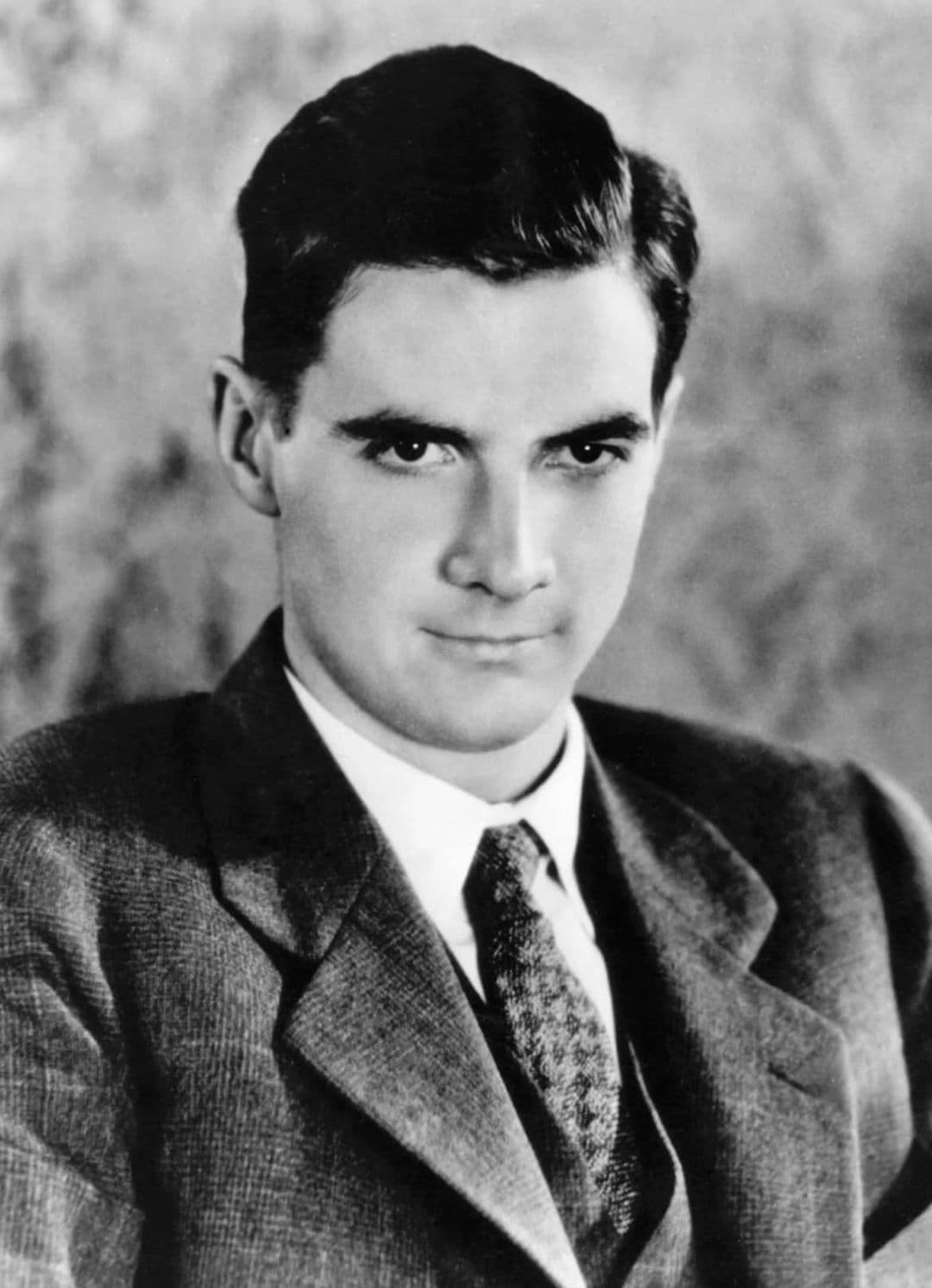
During the first half of his life, Hughes was almost impossible to avoid. He was an industrialist, Hollywood producer, record-breaking aviator and one of the richest men in America.
He produced films. He dated actresses. He broke aviation records. He owned airlines and businesses and became one of America's most photographed millionaires.
Then, gradually, the public stopped seeing him.
By the 1960s, the handsome aviator who had once appeared in newspapers around the world had retreated almost completely from public view.
Yet something extraordinary happened.
Howard Hughes disappeared.
Howard Hughes's empire didn't.
Businesses were bought and sold.
Hotels changed hands.
Millions of dollars moved.
Politicians dealt with his representatives.
Instructions arrived in handwritten memoranda.
People spoke to Hughes on the telephone.
But increasingly, almost nobody actually saw the man supposedly giving the orders. PBS records that Hughes had already spent years in isolation by the time he moved secretly into Las Vegas in 1966.
And that creates an intriguing question.
How long could one of the richest men in the world continue controlling an empire without anybody outside a tiny inner circle actually seeing him?
The Disappearing Billionaire
On Thanksgiving 1966, Hughes arrived secretly in Las Vegas.
There was no press conference.
No photographs.
No grand arrival.
He travelled by private train and was transferred into the Desert Inn, where rooms on the upper floors had been secured for him and his entourage.
Then he effectively vanished inside the hotel.
Hughes remained there for four years.
PBS records that he did not leave the confines of his suite during that period. The curtains remained closed. His rooms were kept isolated from the rest of the hotel.
Yet from inside those rooms Hughes built an extraordinary Las Vegas empire.
He bought the Desert Inn.
Then other casinos and properties followed.
The Sands.
The Frontier.
The Castaways.
The Landmark.
The Silver Slipper.
He also acquired substantial land and business interests.
One of America's most powerful businessmen was conducting deals worth millions without appearing publicly.
The public had to accept something unusual.
Howard Hughes was still there because the people around Howard Hughes said he was.
Robert Maheu
One man became particularly important.
Robert Maheu.
Maheu was a former FBI agent who had also carried out sensitive work connected to the CIA. He eventually became one of Hughes's most important representatives and ran his Nevada operations.
Politicians dealt with Maheu.
Businessmen dealt with Maheu.
Casino operators dealt with Maheu.
When Hughes wanted something negotiated, Maheu negotiated it.
When Hughes wanted someone dealt with, Maheu dealt with them.
Maheu effectively became Hughes's face to the outside world.
There was just one extraordinary problem.
Maheu barely saw Howard Hughes.
Accounts differ slightly over whether Maheu never formally met Hughes face to face or caught only fleeting glimpses of him, but the central fact is clear: during the years Maheu represented Hughes in Las Vegas, their relationship was overwhelmingly conducted through telephone calls and handwritten memoranda.
The Washington Post later described Maheu as Hughes's eyes, ears and mouthpiece. Maheu said Hughes told him he didn't want Maheu to see what he had become physically because he feared Maheu would no longer be able to represent him convincingly.
Think about that for a moment.
One of Howard Hughes's most powerful representatives could negotiate enormous deals in his name without regularly standing in the same room as the man he represented.
If Maheu could operate that way, how many other people doing business with Howard Hughes ever actually saw Hughes himself?
The Memos
Much of Hughes's empire operated through handwritten instructions.
Hughes would write memoranda.
Trusted aides would carry them out of his private rooms.
They would eventually reach people such as Maheu.
Those instructions could concern enormous business transactions, political matters, casino operations and Hughes's personal obsessions.
Many of these memoranda later became public and now form part of archival collections documenting Hughes's Las Vegas years.
They provide powerful evidence that Hughes was actively directing affairs.
But they also demonstrate how unusual his organisation had become.
People didn't necessarily need access to Howard Hughes.
They needed access to instructions believed to have come from Howard Hughes.
Who Actually Saw Him?
This is where Hughes becomes particularly interesting.
Access to him was extraordinarily restricted.
A small group of trusted aides cared for him and controlled entry into his private world.
Employees working elsewhere within his companies could spend years carrying out Hughes's instructions without meeting him.
Politicians could deal with his representatives.
Businessmen could negotiate with his representatives.
Maheu could run Hughes's Nevada interests without regularly seeing him.
The public hadn't seen a contemporary photograph of Hughes for years.
His appearance had reportedly changed dramatically.
PBS describes him during his Las Vegas period as severely underweight, with long hair and extraordinarily long fingernails.
The Howard Hughes remembered by the public no longer resembled the man hidden inside those hotel rooms.
And almost nobody could independently verify what he looked like.
Then How Did Anyone Know Hughes Was Still There?
Primarily through the people around him.
His aides.
His telephone conversations.
His memoranda.
His business decisions.
And occasionally his voice.
That became important in 1971 when writer Clifford Irving announced something extraordinary.
He claimed Howard Hughes had secretly authorised him to write his autobiography.
Irving believed Hughes's reclusive lifestyle gave him the perfect opportunity.
After all, how likely was Howard Hughes to suddenly appear in public and deny it?
The Fake Howard Hughes Autobiography
Clifford Irving claimed he had secretly met Hughes and conducted extensive interviews with him.
Publisher McGraw-Hill believed him.
The supposed autobiography was going to be a publishing sensation.
There was only one problem.
Howard Hughes said it was fake.
On 9 January 1972, Hughes participated in an extraordinary telephone press conference from the Bahamas.
He did not appear physically.
His voice was broadcast to journalists who had known him previously.
Hughes denied ever meeting Irving and said he had never authorised the book.
People familiar with Hughes recognised the voice.
Irving's story collapsed.
He eventually admitted the autobiography was fraudulent and was convicted of fraud.
But the episode demonstrated something remarkable.
The world's uncertainty about Howard Hughes had become so great that someone believed he could fabricate an entire relationship with him because Hughes was unlikely to appear personally and challenge it.
And even when Hughes finally did respond, he did so without showing his face.
Hughes Leaves Las Vegas
In November 1970, Hughes suddenly left Las Vegas.
Once again, there was no public departure.
His aides moved him out of the Desert Inn and he was flown to the Bahamas.
He never returned to Las Vegas.
His relationship with Maheu then collapsed.
Maheu was dismissed.
Hughes continued moving between secluded locations, including the Bahamas, Nicaragua and eventually Mexico.
The circle around him became smaller.
Access became increasingly controlled.
And the question of who was actually making decisions in Hughes's name became increasingly important.
Could Somebody Have Impersonated Howard Hughes?
This is where we have to separate possibility from evidence.
Hughes's extraordinary isolation certainly made impersonation easier than it would have been for almost any other famous person.
Someone didn't necessarily need to walk into a boardroom pretending to be Howard Hughes.
They could communicate through telephone calls.
They could send memoranda.
They could use trusted intermediaries.
They could rely upon the fact that most people expected never to see Hughes anyway.
That is what makes the idea so intriguing.
But there is no credible historical evidence establishing that another man secretly replaced Howard Hughes and ran his empire in his name.
The surviving memoranda, telephone conversations and testimony from people within Hughes's organisation provide considerable evidence that Hughes remained involved.
The opportunity for impersonation existed.
Proof that it actually happened does not.
Then Howard Hughes Died
On 5 April 1976, Hughes was in Mexico and seriously ill.
His condition deteriorated to the point where arrangements were made to fly him to Houston for medical treatment.
He never made it.
Howard Hughes died aboard the aircraft.
He was seventy years old.
The official cause was kidney failure. Contemporary accounts and later histories record that Hughes died during the flight from Mexico to Houston.
But the man who died looked remarkably different from the Howard Hughes remembered by millions of Americans.
Years of illness, isolation, malnutrition and drug dependence had transformed him.
Which created one final identification problem.
Was the Body Really Howard Hughes?
Hughes's physical deterioration meant that visual identification was difficult.
This naturally generated rumours.
If Hughes had spent years hidden from public view and the man who eventually emerged looked dramatically different, how could anyone be certain it was him?
The answer is important.
His identity wasn't established merely because somebody looked at the body and said:
'That's Howard Hughes.'
Authorities used fingerprints.
That represents a substantial obstacle to theories claiming an unidentified substitute simply died in Hughes's place.
A convincing double might fool someone visually.
Matching Howard Hughes's fingerprints is another matter entirely.
There is no credible evidence that the man who died in 1976 was secretly somebody else.
Then Came the Will
Hughes's death produced another extraordinary mystery.
No universally accepted conventional will was immediately available for one of the largest personal fortunes in America.
Then a handwritten document appeared.
It became known as the Mormon Will.
The document supposedly left portions of Hughes's enormous estate to various organisations and individuals.
Among them was a Nevada petrol-station worker named Melvin Dummar.
Dummar claimed that years earlier he had discovered an injured man beside a Nevada road and given him a lift to Las Vegas.
According to Dummar, the man eventually identified himself as Howard Hughes.
The supposed will later left Dummar one-sixteenth of Hughes's estate.
It was an extraordinary story.
A Nevada jury eventually ruled that the will was a forgery.
Dummar received nothing.
But once again Hughes's secrecy had created the perfect environment for another mystery.
Because people knew Howard Hughes behaved strangely enough that almost anything involving him initially sounded possible.
Why Did Hughes Disappear?
Unlike many supposed disappearance stories, Hughes genuinely wanted privacy.
He had suffered serious injuries in aircraft crashes.
He lived with chronic pain.
He became dependent upon narcotics.
His fear of germs and obsessive behaviour became increasingly severe.
And he increasingly withdrew from physical contact with the outside world.
He also had enormous resources.
Private aircraft.
Hotels.
Security.
Trusted aides.
Corporate structures.
Political connections.
Money on a scale almost impossible to comprehend.
If Howard Hughes wanted somewhere private, he could create privacy.
And historically, that is exactly what he did.
He managed to become one of the most famous men in America while simultaneously becoming one of its least visible.
The Strongest Evidence Against the Conspiracy
There is no credible evidence that Howard Hughes secretly died years before 1976 and was replaced.
There is no credible evidence that a permanent body double controlled the Hughes empire.
There are extensive handwritten memoranda attributed to Hughes.
People spoke with him by telephone.
Individuals who knew his voice identified him during the 1972 telephone press conference.
Trusted aides had direct access to him.
His deteriorating physical and psychological condition was observed by those caring for him.
And when Hughes died in 1976, identification evidence supported the conclusion that the body was his.
The historical Howard Hughes was extraordinary enough without inventing a replacement.
But his lifestyle created something almost unique.
A situation in which a substitute might theoretically have operated without most of the world ever needing to see him.
The Questions That Remain
How did one of the most famous men in America manage to disappear from public view for so long?
How many people actually had direct physical access to Howard Hughes during his final decade?
How could Robert Maheu control enormous parts of Hughes's empire while barely seeing the man he represented?
How much power did Hughes's closest aides eventually possess?
When an instruction arrived in a handwritten memorandum, how did someone outside Hughes's inner circle know who had actually written it?
When Hughes spoke by telephone, how many people receiving those calls knew his voice well enough to authenticate it?
Could someone have occasionally impersonated Hughes without needing to replace him permanently?
Did Hughes deliberately create layers between himself and the outside world because he wanted complete privacy?
Or did those layers eventually give the people around him extraordinary control over his life?
How much of Howard Hughes's disappearance was controlled by Hughes himself?
And how much was controlled by the men who controlled access to him?
Perhaps the most interesting question is also the simplest.
If Howard Hughes had disappeared completely years before his official death, how long would it have taken the outside world to realise?