- Born: 8 January 1935
- Officially died: 16 August 1977
- Age: 42
- Location: Graceland, Memphis, Tennessee
- Official cause: Initially described as cardiac arrhythmia, later attributed to hypertensive heart disease
- Autopsy: Yes
- Status: Officially deceased
Did the King really die at Graceland?
The King
By 1977, Elvis Presley had achieved a level of fame that barely existed before him.
The poor boy born in Tupelo, Mississippi, had become the King of Rock and Roll. His records had sold in enormous numbers, his films had filled cinemas, he had served in the US Army and his concerts attracted thousands of fans wherever he went.
But there was another side to being Elvis Presley.
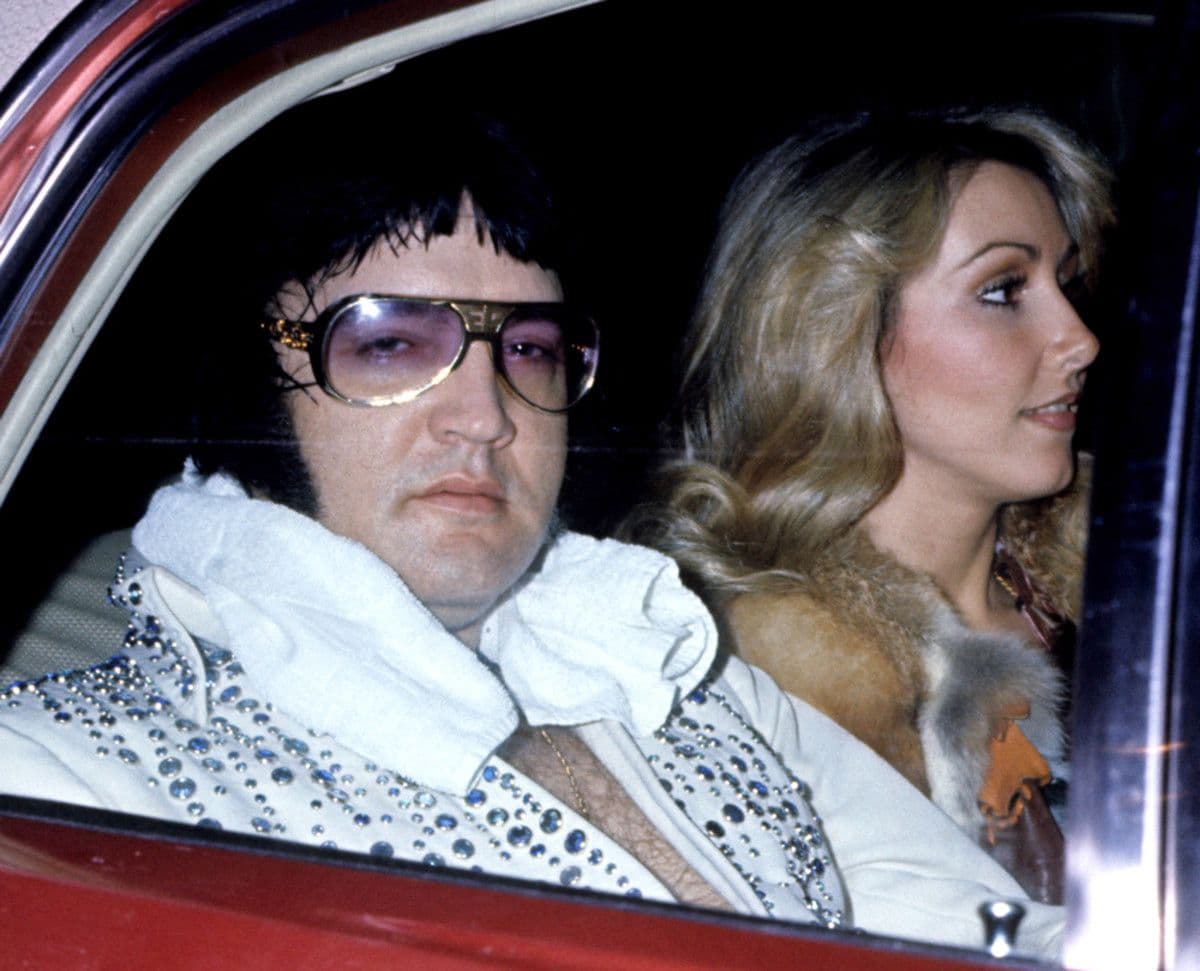
He couldn't simply walk down a street without being recognised. Going shopping, eating in a restaurant or travelling somewhere could become an event. His home at Graceland gave him privacy, but it also increasingly separated him from the ordinary world.
His marriage to Priscilla Presley had ended in divorce in 1973. His health was deteriorating, his weight had increased and his use of prescription medication had become a serious problem. By the final years of his life, Elvis was spending increasing amounts of time within the protected world surrounding Graceland.
Yet he was still working.
Another tour was due to begin on 17 August 1977.
Elvis never made it.
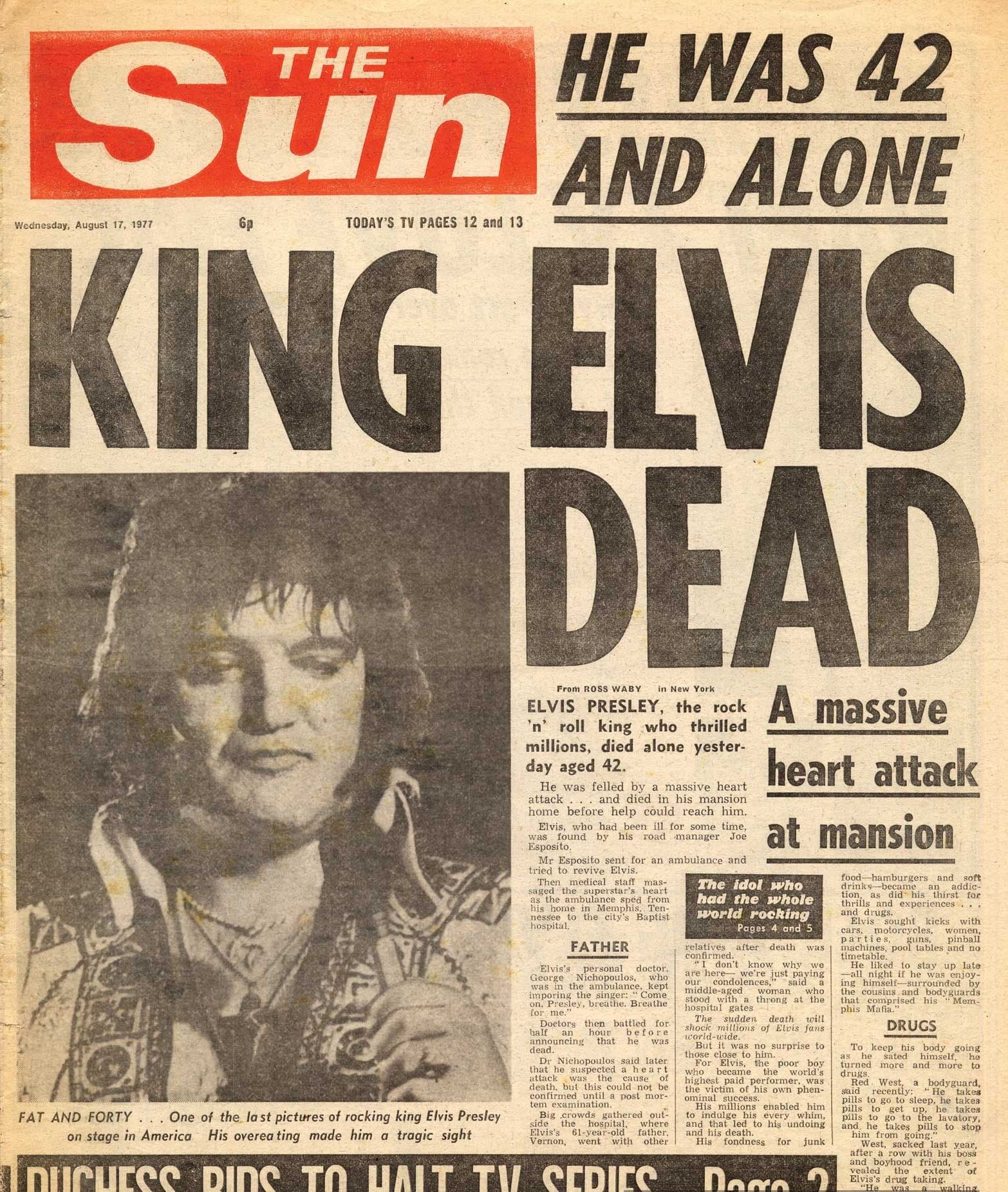
On the afternoon of 16 August, the world was told that Elvis Presley was dead.
He was forty-two.
The Final Day
Elvis spent the final night of his life at Graceland.
During the afternoon of 16 August, he was discovered unresponsive in a bathroom at the mansion. An ambulance was called and Elvis was transported to Baptist Memorial Hospital in Memphis.
Attempts were made to revive him.
They failed.
Elvis Presley was pronounced dead at the hospital at 3.30 pm. Contemporary reporting from The Washington Post confirms his death at forty-two and the circumstances surrounding his arrival at hospital.
Unlike many celebrity deaths that later became surrounded by rumours, there was a body and there were numerous witnesses involved in what happened next.
But questions soon emerged about exactly what had killed him.
What Killed Elvis?
An autopsy was carried out.
Tennessee's chief medical examiner, Dr Jerry Francisco, initially announced that Elvis had died from a cardiac arrhythmia.
There was, however, an important qualification.
Francisco described the diagnosis as presumptive.
The autopsy found that Elvis had an enlarged heart, coronary atherosclerosis and longstanding high blood pressure. Contemporary reporting noted that none of these conditions individually appeared sufficient to provide an obvious explanation for such a sudden death.
Toxicological tests had not been completed when the initial announcement was made.
Those tests would raise further questions.
The Drugs
Elvis's extensive use of prescription medication is well documented.
When toxicology results became available, several drugs were found in his body.
In October 1977, Dr Francisco said four drugs had been detected in significant amounts, including sedatives, codeine and barbiturates. He maintained that they were not present at concentrations sufficient to have caused Elvis's death and attributed the death to hypertensive heart disease.
Other medical professionals subsequently questioned the role prescription medication might have played.
Later reporting surrounding Elvis's personal physician, Dr George Nichopoulos, described traces of numerous drugs being discovered and continuing disagreement over their significance.
This is an important distinction when examining the Elvis conspiracy.
There is genuine uncertainty and controversy surrounding precisely what caused Elvis Presley's death.
That is not the same as evidence that Elvis didn't die.
The Body
This is one of the biggest problems facing anyone who believes Elvis faked his death.
There wasn't simply a death certificate.
There was a body.
Doctors had treated Elvis at the hospital.
An autopsy was performed.
The body was embalmed and prepared for burial.
Then it was returned to Graceland.
Elvis was placed in an open coffin and an estimated 25,000 people filed through Graceland during the public viewing.
Among those who saw him were people who had personally known Elvis.
So if Elvis Presley didn't die on 16 August 1977, any alternative explanation has to answer an extremely difficult question.
Who was in the coffin?
The Funeral
The scale of Elvis's funeral reflected just how famous he had become.
Thousands gathered outside Graceland. More than 3,000 floral arrangements were reportedly delivered, and enormous crowds lined the route of the funeral procession.
Elvis was initially buried at Forest Hill Cemetery beside his mother, Gladys.
Then came another extraordinary episode.
An apparent attempt was made to steal Elvis's body from the cemetery.
Following the incident, permission was obtained to move the remains of Elvis and his mother to the Meditation Garden at Graceland.
Their graves remain there.
That means any fake-death theory has another problem.
The coffin wasn't simply buried and forgotten.
Elvis's remains were subsequently moved.
The Autopsy Questions
There was one element of the investigation that inevitably encouraged suspicion.
The complete details of Elvis's autopsy were not simply made available to the public.
Because the death was treated as a natural death, contemporary reporting explained that the detailed autopsy findings belonged to the Presley family rather than automatically becoming public records.
Dr Francisco himself acknowledged that this restricted the ability of outside experts to examine all the evidence independently.
As questions grew about Elvis's prescription drug use, so did allegations that the true cause of his death had been concealed.
In 1979, ABC's 20/20 investigated whether drugs had played a greater role in Elvis's death than had originally been acknowledged.
Francisco denied participating in any cover-up.
Again, there is an important distinction.
The genuine controversy was primarily over how Elvis died.
Not whether he died.
But that didn't stop another theory from taking hold.
Elvis Lives
It didn't take long.
Stories began appearing claiming that Elvis Presley had been seen alive.
People reported seeing him in airports, restaurants, petrol stations and supermarkets.
Photographs appeared supposedly showing an older Elvis.
Books investigated the possibility.
Television programmes examined sightings.
Tabloids repeatedly resurrected him.
Eventually the phrase "Elvis Lives" became part of popular culture.
Most of the sightings were impossible to verify, and none has produced credible evidence that Elvis survived 16 August 1977.
But the theory has endured for nearly half a century.
Perhaps part of the reason is that people could imagine Elvis wanting exactly what his supposed death would have given him.
Freedom.
Did Elvis Have a Reason to Disappear?
This may be the most interesting part of the theory.
By 1977, Elvis Presley had spent more than twenty years being Elvis Presley.
His fame had given him extraordinary wealth, but it had also taken away something most people barely think about.
Anonymity.
He couldn't simply go somewhere without attracting attention. He travelled surrounded by friends, employees and security. Graceland provided protection from the outside world, but that protection also contributed to an increasingly isolated existence.
Contemporary reporting following his death described a man struggling beneath the enormous weight of his own image and celebrity.
So imagine Elvis had reached a point where he wanted out.
He had money.
He had private aircraft.
He had loyal employees.
He had powerful connections.
He had access to almost anything money could buy.
Except anonymity.
How does Elvis Presley disappear when almost everyone in America knows his face?
Changing his name wouldn't be enough.
Moving abroad wouldn't necessarily be enough.
Even changing his appearance might not be enough.
There was perhaps only one event capable of stopping the world from searching for Elvis Presley.
The death of Elvis Presley.
That gives the conspiracy a motive.
It doesn't give it evidence.
If Elvis Survived, Who Died?
This is where the theory becomes much harder to sustain.
For Elvis to have escaped Graceland alive, somebody else would apparently have needed to take his place.
And this couldn't simply have been a body placed inside a coffin.
The substitute would have needed to survive far greater scrutiny.
Doctors examined the body.
An autopsy was performed.
Medical conditions consistent with Elvis's poor health were discovered.
Toxicology testing was conducted.
The body was embalmed.
It was displayed publicly.
Friends and members of Elvis's family saw it.
There is no credible evidence that such a substitute existed.
Any serious version of the conspiracy therefore requires far more than Elvis quietly slipping away.
It requires other people to have participated.
Who Would Have Needed to Know?
Think about the practicalities.
If Elvis's death had been deliberately staged, somebody would have needed to arrange the substitute.
Someone would have needed to ensure the person could convincingly be identified as Elvis.
The events at Graceland would need to be controlled.
The ambulance journey would need explaining.
The hospital would become part of the problem.
So would the doctors.
Then there was the autopsy.
The funeral home.
The family.
Elvis's closest friends.
And eventually the people involved in moving his remains.
Perhaps not everyone would need to know the entire plan. People can unknowingly participate in events without understanding what is really happening.
But the further the theory is examined, the larger the required deception becomes.
And large conspiracies have a problem.
People talk.
Orion
Then something happened that added another strange chapter to the Elvis mythology.
A singer named Jimmy Ellis possessed a voice remarkably similar to Elvis.
After Elvis's death, Ellis performed under the stage name Orion, often wearing a mask.
To some listeners, the resemblance was extraordinary.
Rumours inevitably followed.
Could Orion actually be Elvis Presley performing again while hiding his identity?
The answer was no.
Jimmy Ellis was a real person with his own documented identity.
But Orion demonstrated something interesting.
A performer could sound remarkably like Elvis.
And audiences could be persuaded to wonder whether the man behind the mask might actually be the King.
It helped feed a conspiracy that was already becoming part of American folklore.
The Strongest Evidence Against the Conspiracy
There is no point examining the possibility that Elvis survived without confronting the evidence that says he didn't.
Elvis was found unresponsive at Graceland.
An ambulance transported him to hospital.
Medical personnel attempted to revive him.
Doctors pronounced him dead.
His body underwent an autopsy.
Medical abnormalities were documented.
Toxicology testing detected prescription medication.
The body was embalmed.
Thousands of people viewed him.
Friends and family attended his funeral.
He was buried.
His remains were subsequently moved.
There is currently no credible evidence demonstrating that Elvis Presley faked his death.
That is where the historical evidence stands.
But it hasn't stopped people asking questions.
The Questions That Remain
Was Elvis Presley becoming trapped by the extraordinary fame he had created?
If he had wanted to escape, where could one of the most recognisable people on Earth possibly have gone?
Why was the initial explanation for his death described as presumptive?
Exactly what role did the prescription drugs in his body play?
Why did medical professionals disagree about their significance?
Why weren't the complete autopsy findings immediately available for independent public scrutiny?
Could another person ever have convincingly taken Elvis's place?
If so, how could a substitute have survived an autopsy without the doctors noticing?
Could Elvis's family have been deceived?
Or would some of them have needed to know?
How many people would be required to stage something this complicated?
And could all of them really have kept the secret?
There is considerable evidence that Elvis Presley died at Graceland on 16 August 1977.
But there is one question that has refused to disappear with him.
If Elvis Presley had genuinely decided that he wanted his old life to end, could the most famous man in the world ever disappear without first convincing the world that the King was dead?